Journal · 31 July 2026 · By Vicki Harding
The Body Remembers: Why Old Falls, Knocks and Frights Still Show Up Today
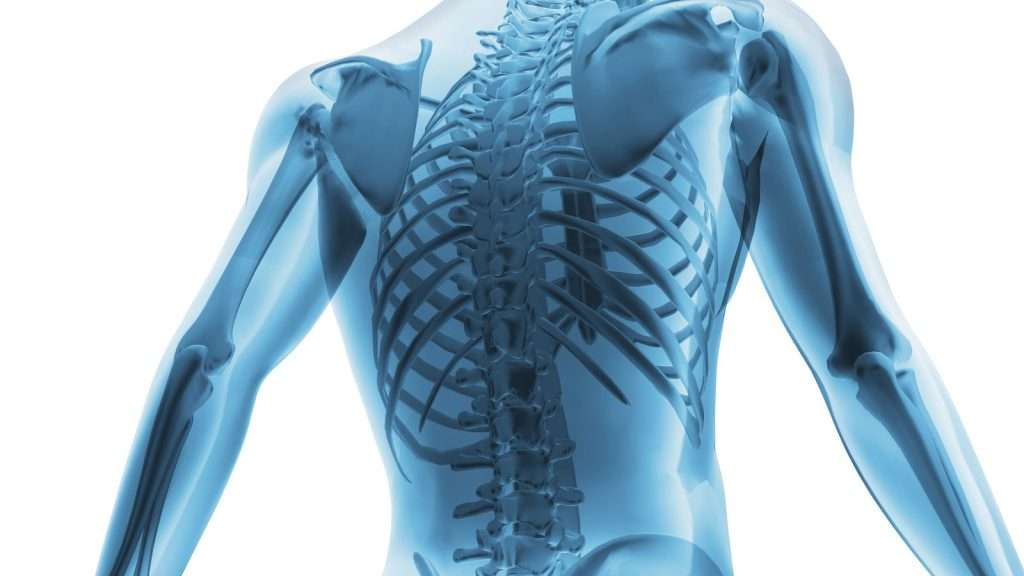
Somewhere in your history there’s a moment your body has never quite let go of.
The bike accident at nine. The netball ankle that never trusted uneven ground again. The fall down the last two stairs in the dark. It was years ago. The bruises faded, the bone knitted, the physio signed you off. As far as medicine is concerned, that chapter closed.
And yet. The ankle still “goes” on uneven ground. Or the hip that’s simply gone quiet on one side, numb and dense, as if it never quite came back online. Or it’s a spot that’s stayed flat and unresponsive for so long, you’ve quietly adapted your whole way of moving around it without ever noticing you had.
Medically, there’s nothing to find. So what, exactly, is the body still preparing for?
The moment of impact
When a sudden knock, fall or fright hits, the body does something clever and instant: it braces. Muscles grip, the nervous system flares, and the skeleton clenches against the force, faster than you could ever think your way through it.
We expect that once the danger passes, everything settles back down. But sometimes it doesn’t, not completely. In ConTact C.A.R.E, a New Zealand-born discipline that grew out of martial arts, this is called a flinchlock: a moment of skeletal sensory shock that gets locked into a bone. Once triggered, the whole balance centre is thought to quietly shift to accommodate the site, and that frozen contraction becomes the body’s working normal: a real, physical pattern still locked into the structure itself.
And once you know to look for it, you see it everywhere: the old injury that never fully resolved, the niggle that makes no sense on a scan, the joint that tires faster than it should. The tissue healed. The shock stayed locked in place.
“But I don’t remember hurting myself”
This is one of the most common things I hear, and it’s completely fine. You don’t need to know what caused something for your body to be ready to release it.
Many of the patterns I work with trace back to moments people can’t consciously place at all: a childhood tumble, an old sporting knock, even the ordinary jolts of a busy life that never seemed worth remembering. Your body kept the record even when your mind didn’t. In a session, I work with what the body is holding now, not with what you can recall.
Working with the body, not against it
ConTact C.A.R.E is hands-on, precise and gentle. There’s no cracking, no forcing, no pushing through pain, and it’s done fully clothed. Rather than pushing against the body, the work re-creates the direction of that original impact, the very pressure the body first braced against. In a safe, unhurried setting and given the right circumstances, the body is often able to release the flinchlock.
I never get tired of watching it happen. A settling, a warmth, sometimes a joint that moves more freely again. Some clients laugh out loud. Some go very quiet. Every body and every session is different, but that sense of something shifting is what people mention most.
When it isn’t only the body
A flinchlock doesn’t always stay physical. Where a knock carries an emotional layer with it, and they often travel together, the two can end up tangled: a shoulder blade gone dense and unmoving, a heart just as frozen, holding the same old surprise in different ways. If you’ve ever caught yourself wondering why you still feel stuck, in ways that have nothing obvious to do with an old fall, it’s worth knowing that the body and the emotions rarely release on entirely separate tracks.
It’s not only for people
One of the lovely quirks of this work is that it isn’t limited to humans. The method was actually born with a horse, and animals were where it was first properly understood: a horse or a dog can’t be talked into imagining a result, so what practitioners were seeing had to be real, structural change, not a story the mind told itself. Equine ConTact C.A.R.E has since grown into its own dedicated branch, often turned to by owners dealing with a horse that’s gone unsound, a sore back, head-shaking, trouble settling under saddle, or the kind of concussion and unresolved injury that shows up as a change in temperament rather than an obvious limp. Riders often carry their own flinchlocks too, and it’s not unusual for a horse to seem to mirror exactly where its rider is guarded. Small animals hold their frights just as faithfully, and respond just as honestly.
Worth asking yourself
Is there a part of your body you’ve been quietly negotiating with for years? Not injured, exactly, just never quite yours again since a particular day?
That’s worth listening to. Your body kept a record of the moment for a reason, and it will happily close the file, it just needs the right kind of help to do it.
If you’re in or near Auckland, book a ConTact C.A.R.E session and let’s find what your body is still holding. Curious how the method itself came about? You can read the full story of how ConTact C.A.R.E works first.
Join the Journal
A short note from me when something new is published, no noise, and you can leave any time.
Lovely – one last step: a confirmation email is on its way to you. Click the button in it and you're on the list.